
News
Stay updated with Ledrobit’s latest technological advancements, patent achievements, and global market expansions as we continue to innovate in industrial automation.
Single-Head Stone Polishing Machines: Improving Precision and Flexibility in Modern Stone Processing
The global stone processing industry continues to face changing production requirements. Architectural decoration, customized countertops, monuments, interior design and engineered stone products all require reliable surface finishing with consistent quality. While large-scale factories often rely on multi-head continuous polishing lines for standard slab production, smaller workshops and specialized manufacturers need more flexible equipment to handle customized orders and irregularly shaped materials.
This shift has increased interest in the Single-Head Stone Polishing Machine, particularly among stone fabricators looking for a practical balance between processing precision, equipment investment and production flexibility.
Unlike conventional multi-head polishing systems designed primarily for continuous, high-volume production, single-head equipment provides a more focused approach to grinding and polishing. Operators can adjust processing parameters according to different stone materials, surface conditions and finishing requirements.
For manufacturers handling diverse orders, this flexibility can help improve production planning while maintaining the surface quality expected by downstream customers.
Why Stone Manufacturers Are Paying More Attention to Single-Head Polishing Technology
Stone surface finishing involves more than simply making a slab look glossy. Grinding and polishing directly affect surface flatness, appearance, dimensional accuracy and the final quality of stone products.
Several production challenges are encouraging manufacturers to reconsider their polishing equipment.
Customized Orders Require More Flexible Processing
Architectural stone projects increasingly involve non-standard dimensions, decorative components, special-shaped slabs and individually designed stone products. These orders may not be suitable for conventional continuous polishing lines, especially when production quantities are limited.
A Single-Head Stone Polishing Machine allows manufacturers to process individual workpieces and different specifications without relying entirely on a fixed multi-head production configuration.
This makes it particularly useful for headstone manufacturing, decorative stone fabrication, customized architectural components and small-batch processing.
Surface Consistency Remains a Major Quality Concern
Uneven grinding pressure, inconsistent tool movement and unsuitable abrasive selection can result in scratches, uneven gloss or excessive material removal.
These problems become more noticeable when processing irregular surfaces or materials with different hardness levels.
Modern polishing equipment addresses these challenges through adjustable grinding pressure, controlled movement paths and variable-speed operation. By selecting suitable processing parameters, operators can better control material removal during different finishing stages.
Factory Space and Equipment Investment Matter
Not every stone processing business operates a large production facility. For small and medium-sized manufacturers, equipment footprint, installation requirements and operating costs are important purchasing considerations.
A single-head configuration offers a more compact processing approach than many multi-head continuous polishing systems. It can also serve as a dedicated finishing or repair station alongside existing stone production equipment.
This allows manufacturers to improve specific processing operations without necessarily replacing their entire production line.
How Modern Polishing Equipment Improves Processing Accuracy
Equipment development is increasingly focused on improving control rather than simply increasing the number of polishing heads. Several technologies are becoming important considerations when manufacturers evaluate new stone finishing machinery.
Automated Tool Changing for Multiple Grinding Stages
Stone polishing normally involves several processing stages, including coarse grinding, intermediate grinding, fine grinding and final polishing.
Each stage requires suitable abrasive tools to achieve the desired surface condition.
Automatic tool-changing technology helps reduce manual intervention when switching between different abrasive grades. It can improve workflow continuity and reduce the time operators spend preparing tools between processing stages.
Vision Systems for Irregular Stone Shapes
Traditional processing methods can become complicated when workpieces have curved edges, irregular contours or customized outlines.
An integrated vision system can identify workpiece shapes and provide contour information for programmed tool movement. This is particularly useful for manufacturers processing decorative stone components, special-shaped slabs and customized architectural products.
Variable-Speed Control and Adjustable Grinding Pressure
Different stone materials respond differently to grinding and polishing.
Natural marble, granite, engineered quartz and technical ceramics have different physical characteristics, meaning that a single fixed processing setting may not deliver suitable results across all materials.
Variable-frequency motor control allows operators to adjust rotational speed according to processing requirements. Independent pressure and movement-path adjustments also help improve control when working with different surface conditions.
These functions are important when manufacturers need to balance processing efficiency with surface quality.
Applications Beyond Standard Marble and Granite Slabs
The application range of modern single-head polishing equipment is not limited to conventional flat stone surfaces.
Architectural and Decorative Stone
Decorative wall panels, stone inlays, stair components and customized interior stone products often require localized finishing and precise contour treatment. Flexible polishing equipment helps manufacturers handle these specialized orders.
Headstones and Monument Manufacturing
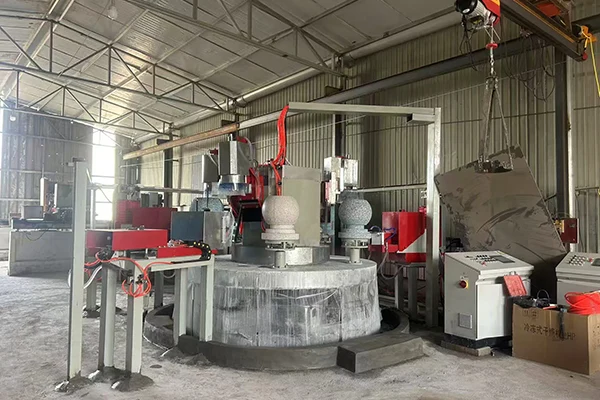
Monument production frequently involves customized shapes, different dimensions and detailed surface finishing. A single-head configuration is suitable for workshops that process relatively small batches of stone products with varying specifications.
Engineered Stone and Composite Materials
Engineered quartz, cement-based terrazzo and other composite stone products may require different grinding parameters depending on their composition and hardness. Adjustable processing settings provide greater flexibility when switching between materials.
Surface Repair and Secondary Processing
Even when a factory already operates a large continuous polishing line, certain slabs may require additional finishing. Local scratches, missed polishing areas and surface defects can create extra work.
A dedicated polishing station can help manufacturers handle these secondary processing tasks without interrupting their main production workflow.
What Should Buyers Consider Before Purchasing Stone Polishing Equipment?
Choosing suitable equipment requires more than comparing motor power or machine dimensions. Buyers should evaluate how the machine fits their actual production requirements.
Processing Size and Workpiece Thickness
Confirm the maximum workpiece length, width and height supported by the machine. These dimensions should match the largest products regularly processed in the factory.
Manufacturers producing architectural components or customized stone products should also consider whether the equipment can accommodate their special-shaped workpieces.
Automation and Operating Requirements
Automatic tool changing, vision recognition and adjustable processing parameters can reduce manual operations. However, buyers should also evaluate control-system usability, operator training requirements and maintenance procedures.
Motor Power and Cooling Water Supply
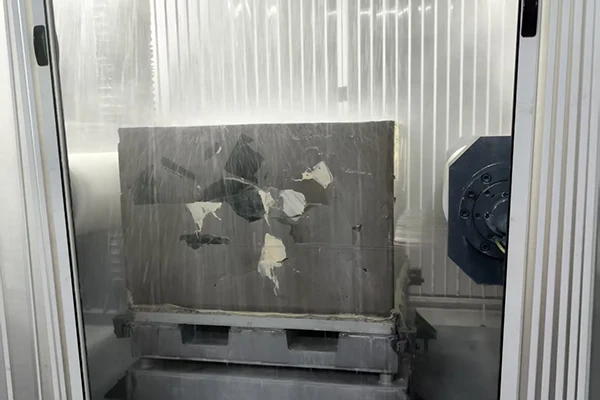
Motor power affects the machine's operating capability, while cooling water helps manage heat generated during grinding and polishing.
Before installation, buyers should confirm the electrical supply, water consumption, drainage arrangements and other facility requirements with the equipment supplier.
After-Sales Service and Spare Parts
Stone processing equipment operates in demanding industrial environments. Abrasive tools, mechanical components and electrical systems require regular inspection and maintenance.
Reliable technical support, spare-part availability, installation guidance and operator training should therefore be included in the purchasing evaluation.
Ledrobit's Approach to Flexible Stone Surface Processing
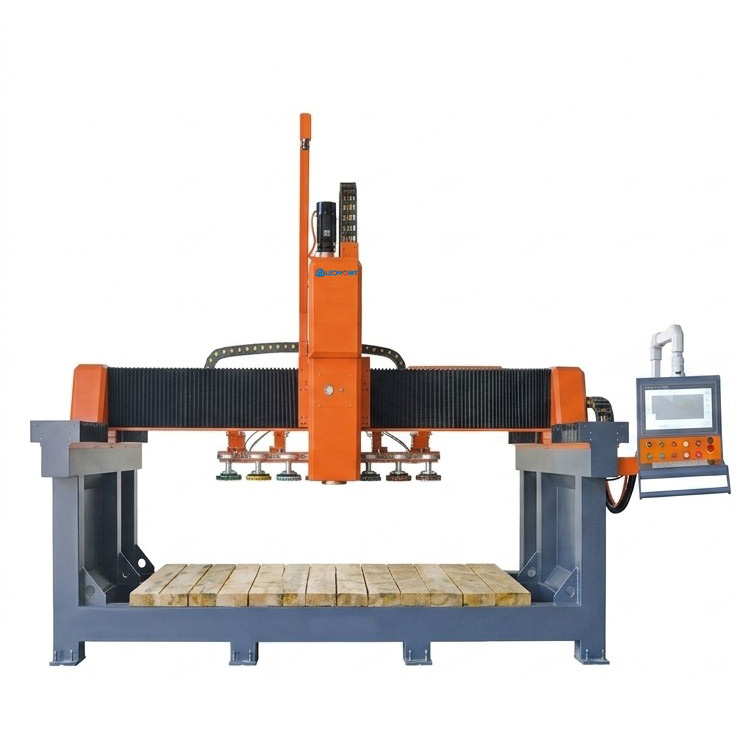
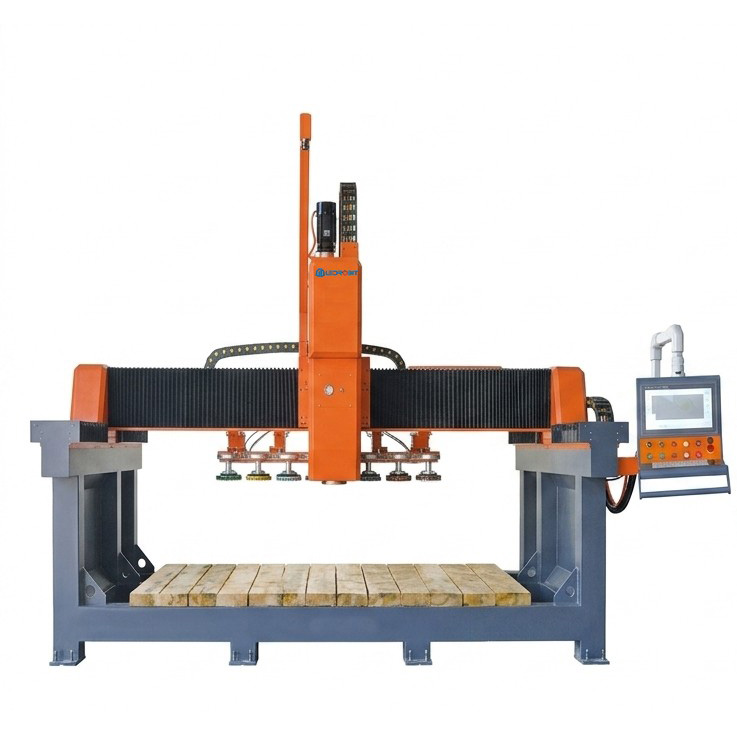
To meet the needs of manufacturers handling customized stone products and specialized finishing tasks, Ledrobit offers a Single-Head Stone Polishing Machine designed for flexible processing applications.
The equipment features a maximum processing dimension of 3200 × 1500 mm and a maximum processing height of 600 mm. Its 7.5 kW variable-frequency main motor provides adjustable operating speed, while the total installed power is 14 kW.
The machine integrates several functions that support more controlled stone finishing:
- Automatic Tool Changing: Supports different abrasive stages and reduces manual tool replacement.
- Vision Recognition: Helps identify irregular workpiece contours for programmed processing.
- Dual Y-Axis Drive: Uses front and rear drive arrangements to support stable machine movement.
- Adjustable Processing Parameters: Allows operators to regulate grinding pressure, movement paths and rotational speed.
- Multiple Processing Functions: Supports surface calibration, contour polishing and skip grinding.
With a 200 mm grinding disc and an overall machine footprint of 5300 × 2600 × 2600 mm, the equipment is designed for workshops that need to process different stone specifications and customized components.
Its cooling water consumption is approximately 6 m³/h, which should be considered when preparing factory utilities and installation arrangements.
For manufacturers looking to improve finishing flexibility without depending entirely on large continuous polishing systems, this equipment offers another option for organizing their stone processing workflow.
The Future of Stone Polishing Is About Precision and Adaptability
As stone manufacturers serve more diverse architectural and decorative markets, production flexibility is becoming an important part of equipment selection. Large-scale continuous polishing lines remain valuable for standardized, high-volume production, while single-head systems provide an alternative for customized orders, irregular workpieces and secondary finishing operations.
The right equipment depends on production volume, material characteristics, processing dimensions and required surface quality.
For stone fabrication workshops evaluating new polishing solutions, investing in suitable automation and adjustable processing technology can help improve finishing consistency, reduce unnecessary manual work and support a wider range of customer requirements.
Discuss Your Stone Polishing Requirements with Ledrobit
Looking for a flexible solution for your stone finishing operations? Contact Ledrobit to discuss your material types, workpiece dimensions and production requirements. Our team can help you evaluate suitable machine configurations for your stone processing projects.
Learn more about our Single-Head Stone Polishing Machine and explore its capabilities for your stone processing applications.
Related News
- LEDROBIT Introduces LDLM9030 Heavy Duty Stone Slab Loader Unloader for Automated Stone Processing Lines
- Vertical or Horizontal Curing Ovens for Marble? It Depends on Resin Curing Time and Factory Space
- What Are Artificial Stone Machines and How Do They Improve Production Quality?
- What Makes an Artificial Stone Curing Oven Essential for Consistent Stone Quality?
- How Ultra-Fine Wire Saw Technology Improves Stone Processing Efficiency and Material Yield
- How North American Precast Plants Tackle Bollard Polishing Bottlenecks with 5-Station Automation
Leave me a message
News Recommendations