
News
Stay updated with Ledrobit’s latest technological advancements, patent achievements, and global market expansions as we continue to innovate in industrial automation.
LEDROBIT Introduces LDLM9030 Heavy Duty Stone Slab Loader Unloader for Automated Stone Processing Lines
LEDROBIT, an industrial manufacturer specializing in stone automation equipment, has officially introduced the LDLM9030 Heavy Duty Stone Slab Loader Unloader. Developed over twelve months in response to the material handling requirements of high-volume stone processing facilities in China, North America, and Europe, this new system is designed to address loading and unloading bottlenecks at the entrance and exit of continuous granite flaming and sandblasting production lines.
Stone slabs vary significantly in thickness, weight, and storage orientation. These differences create challenges for automated handling systems, particularly in factories processing both thin architectural panels and heavy paving stones. The new LDLM9030 provides a flexible handling solution that combines vertical slab tilting with horizontal pickup and palletizing, helping manufacturers improve material transfer efficiency and production line coordination.
One Machine for Different Stone Slab Handling Requirements
According to the Dimension Stone Design Manual (DSDM) published by the Natural Stone Institute, architectural granite products cover a wide range of thickness specifications. Typical exterior wall panels may measure 20–30 mm thick, while heavy paving slabs and municipal curbstones can reach 200 mm (8 inches).
These different material characteristics require different handling methods:
- Thin granite cladding (20–30 mm): Generally stored vertically on A-frames to reduce the risk of bending stress and cantilever-related cracking.
- Heavy paving slabs (50–200 mm): Due to their substantial weight, these materials are typically stacked horizontally on wooden pallets or staged directly on the factory floor. Individual slabs can weigh up to 3,000 kg, depending on their dimensions and material density.
Conventional handling equipment often focuses on only one operating method, either picking up horizontally stacked slabs or transferring vertically stored slabs through a tilting process. This can force stone fabricators to use multiple machines or additional manual handling operations.
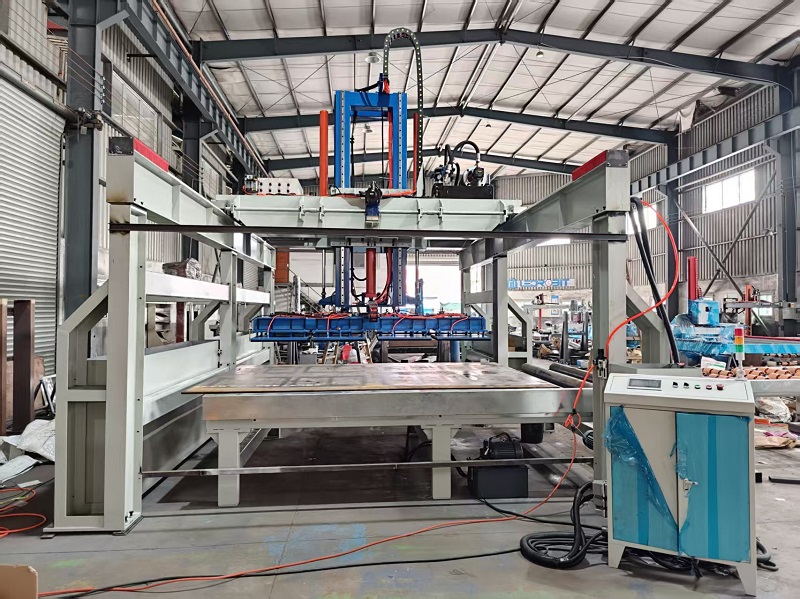
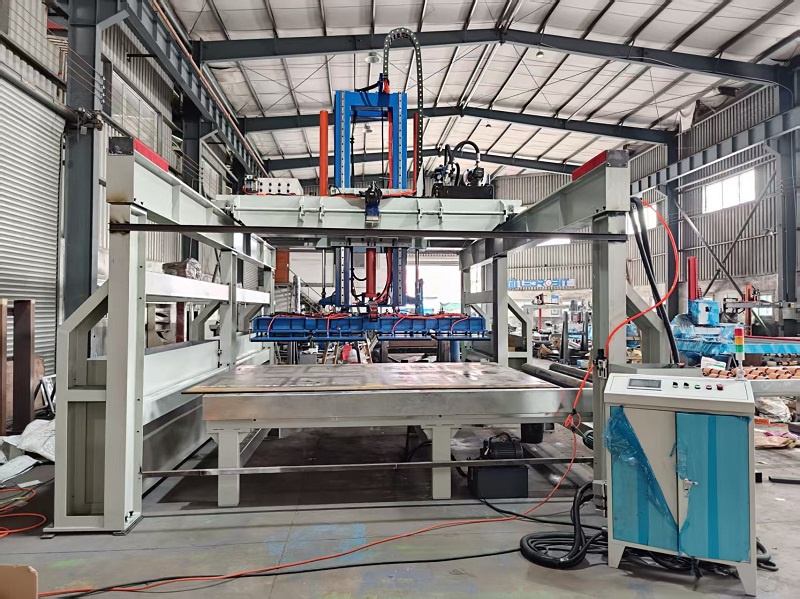
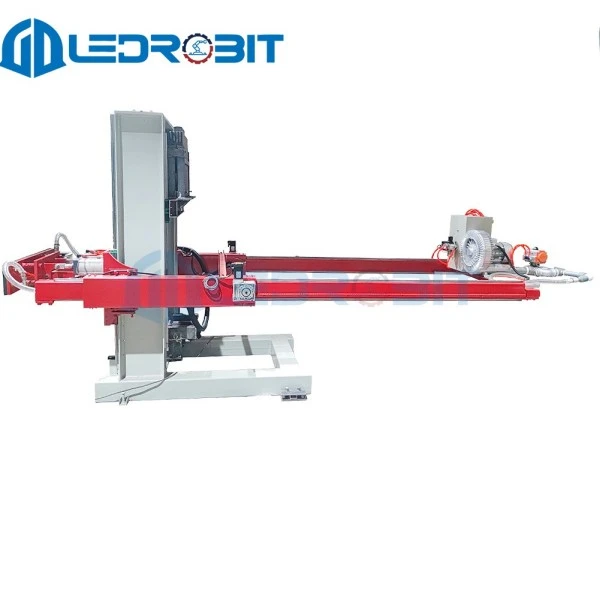
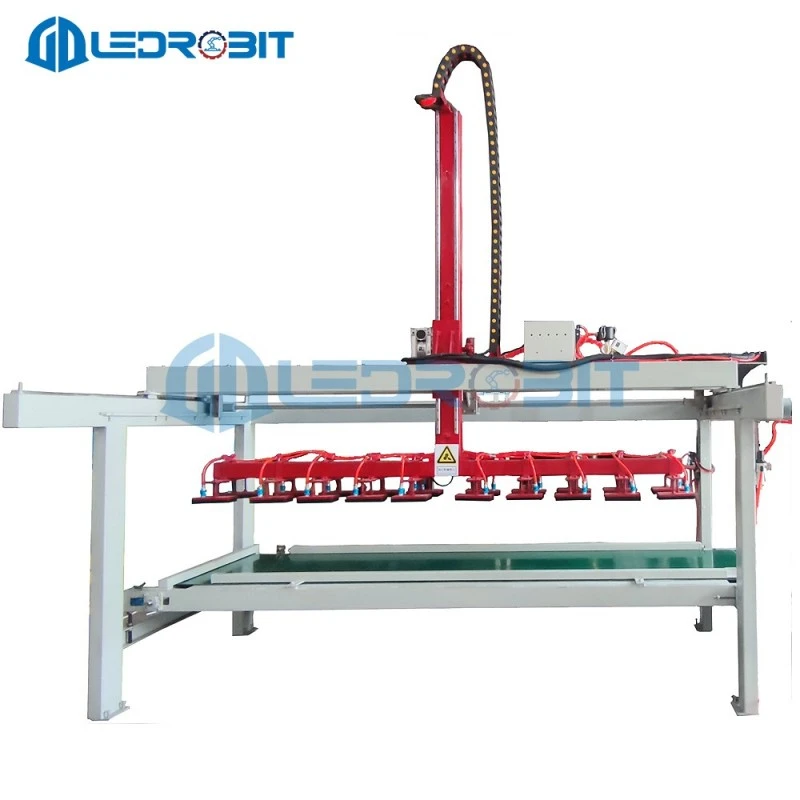
The LDLM9030 is designed to combine both handling functions in one system. It supports automated 90-degree tilting from vertical A-frames as well as direct horizontal slab pickup and palletizing. This dual-mode configuration gives factories greater flexibility when processing granite products with different thicknesses and storage arrangements.
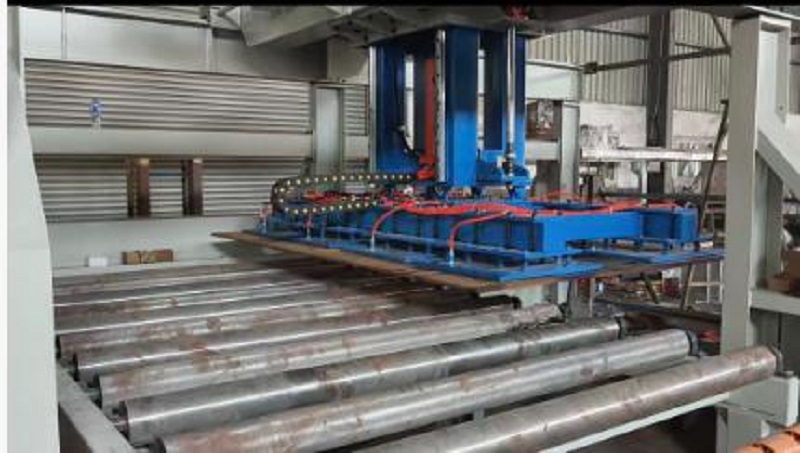
Reducing Material Handling Delays in Flaming and Sandblasting Lines
Modern multi-head flaming machines and abrasive sandblasting equipment can process stone surfaces at high speeds. However, the overall production capacity of a processing line also depends on how quickly raw slabs enter the equipment and finished slabs are transferred to the next stage.
As discussed in Stone World's coverage of slab surface texturing, material handling and production coordination are important considerations in automated stone processing operations. Delays caused by manual crane positioning, rigging, and slab alignment can interrupt continuous production.
Manual handling also presents significant workplace risks. The OSHA Safety and Health Information Bulletin SHIB 08-12-2008 addresses hazards associated with storing, unloading, and handling granite, marble, and other stone slabs, including the risk of serious crush injuries.
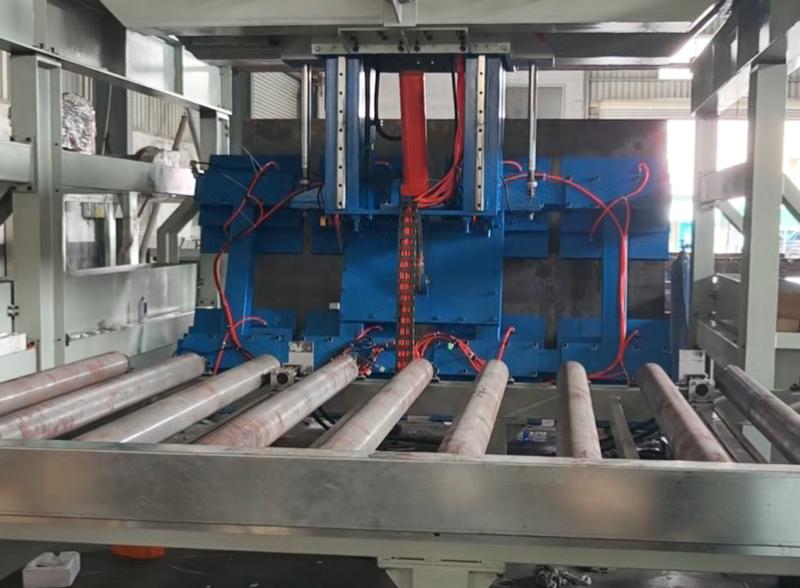
By automating slab pickup, positioning, and transfer, the LDLM9030 is intended to reduce dependence on manual crane operations and help manufacturers maintain a more consistent material supply for downstream processing equipment.
Four Engineering Features of the LDLM9030
To accommodate the demanding conditions of industrial stone processing, LEDROBIT has incorporated several mechanical and control features into the LDLM9030 design.
Dynamic Angle-Sensing Tilting System
The suction beam is equipped with precision pitch sensors that detect the natural resting angle of stone slabs stored on A-frames. Based on the detected position, the system adjusts the suction array before initiating a controlled 90-degree servo-driven rotation onto the conveyor bed.
This approach helps improve alignment during slab transfer and supports more consistent loading operations across different A-frame configurations.
Closed-Cell Sponge Vacuum Suction Technology
Rough-sawn granite and flamed stone surfaces often contain irregularities, including small surface depressions and uneven textures. These conditions can make conventional hard rubber suction cups less effective because air may escape through gaps between the suction cup and the stone surface.
The LDLM9030 uses a high-density closed-cell sponge suction array designed to conform to surface irregularities. Its compressible structure helps maintain contact across uneven stone surfaces and supports a reported vacuum holding pressure of -0.08 MPa, including on wet and textured slabs.
This suction configuration is intended to improve gripping stability when handling materials with rough surface finishes. Actual holding performance depends on slab surface conditions, temperature, moisture, and the machine's operating configuration.
Crossbeam-Free Gantry Architecture
Unlike conventional gantry structures with a top horizontal crossbeam, the LDLM9030 adopts a cantilevered architecture without the traditional upper crossbeam. This design helps maintain clearance for existing overhead bridge cranes and reduces the possibility of interference between the loader structure and crane hooks.
For factories with established overhead lifting systems, equipment clearance is an important consideration when introducing new automated handling stations.
Integration with Complete Stone Processing Lines
In addition to supplying standalone loading and unloading machines, LEDROBIT provides integrated stone processing line solutions. The LDLM9030 can be incorporated into production layouts featuring high-speed flaming machines, sandblasting tunnels, conveyors, and multiple loading or unloading stations.
Coordinating these systems helps manufacturers establish a more continuous material flow between processing stages, reducing unnecessary transfers and improving overall production organization.
Customized Factory Layout and Engineering Support
Installing a new automated loader into an existing stone processing facility requires careful consideration of conveyor height, available floor space, overhead crane clearance, slab dimensions, and maximum material weight.
To support factory upgrades and new production line projects, LEDROBIT offers engineering assessments for customers planning to integrate the LDLM9030 into existing conveyor systems.
Plant managers can submit the following information for an initial layout assessment:
- Existing roller conveyor height and width.
- Maximum slab length and width.
- Maximum slab thickness, up to 200 mm.
- Maximum slab weight, up to 3,000 kg.
- Existing overhead crane positions and available installation space.
- Production line configuration and loading/unloading station requirements.
Based on the submitted information, LEDROBIT's engineering team can provide a complimentary CAD factory clearance assessment and workflow layout to help customers evaluate equipment positioning, installation feasibility, and material transfer routes.
Real Project: Multi-Station Sandblasting Line for a European Customer
Beyond individual equipment supply, LEDROBIT also supports customized automation projects for international stone processing facilities.
The following CAD layout illustrates a sandblasting production line designed for a European customer, featuring multiple unloading stations. This type of coordinated layout helps organize slab movement across different processing positions and provides a reference for factories planning automated material handling upgrades.
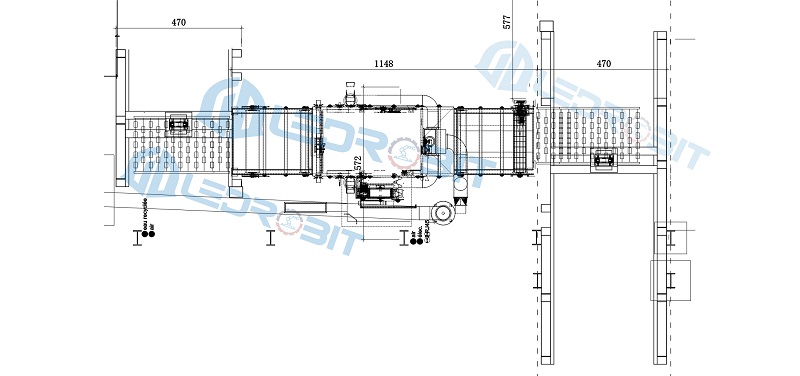
By combining equipment configuration with factory-specific layout planning, LEDROBIT aims to provide stone manufacturers with practical automation solutions that match their production capacity, workshop conditions, and material handling requirements.
Contact LEDROBIT for Stone Handling Automation Solutions
Whether you are upgrading an existing granite flaming line, building a new sandblasting workshop, or looking to automate the handling of heavy stone slabs, choosing equipment that accommodates different slab orientations and dimensions is essential.
LEDROBIT provides industrial stone automation equipment, including the LDLM9030 Heavy Duty Stone Slab Loader Unloader and integrated material handling solutions. Contact our engineering team to discuss your slab specifications, conveyor configuration, and factory layout requirements.
Email: sales@ledrobit.com
WhatsApp: +86 135 9999 5268
LEDROBIT – Industrial Stone Automation Equipment for More Efficient Processing Lines.
Technical References
- Natural Stone Institute – Dimension Stone Design Manual (DSDM): Reference material covering architectural dimension stone specifications and applications.
- Stone World – Slab Texturing Through Water Pressure: Industry coverage of stone surface texturing and processing technologies.
- OSHA SHIB 08-12-2008 – Hazards of Storing, Unloading, and Handling Granite, Marble, and Stone Slabs: Workplace safety guidance on stone slab handling hazards.
Related News
- How Can Small Stone Slabs Be Loaded and Unloaded Automatically?
- Single-Head Stone Polishing Machines: Improving Precision and Flexibility in Modern Stone Processing
- Vertical or Horizontal Curing Ovens for Marble? It Depends on Resin Curing Time and Factory Space
- What Are Artificial Stone Machines and How Do They Improve Production Quality?
- What Makes an Artificial Stone Curing Oven Essential for Consistent Stone Quality?
- How Ultra-Fine Wire Saw Technology Improves Stone Processing Efficiency and Material Yield
Leave me a message
News Recommendations